
Explorar el mundo a través de las palabras
- hace 6 días
- 2 Min. de lectura
Por Claudia Liliana Vásquez

En la clase de Castellano, los estudiantes de Transición continúan fortaleciendo su aprendizaje a partir del vocabulario de la semana, integrando experiencias significativas que conectan el lenguaje con el mundo que los rodea. En esta ocasión, el enfoque estuvo en los continentes, permitiendo a los niños ampliar su comprensión del entorno global.
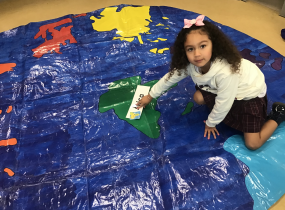
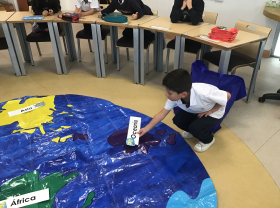
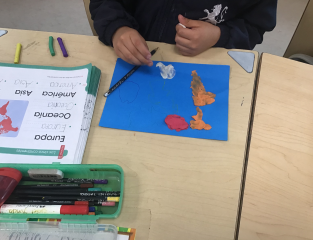
La actividad se articuló con el recorrido que los estudiantes han realizado a lo largo del año por nueve países, promoviendo una mirada de ciudadanía global desde edades tempranas. A través de una experiencia creativa y sensorial, cada estudiante construyó sus propios continentes en plastilina, ubicando las palabras correspondientes y recordando los países explorados en cada uno de ellos.

Como parte del proceso, los estudiantes escribieron los nombres de los países trabajados y crearon oraciones sencillas en las que expresaron lo que más les gustó y lo que aprendieron de cada lugar. Este ejercicio no solo fortaleció sus habilidades de escritura, sino que también promovió la reflexión sobre la diversidad cultural y los aprendizajes construidos a lo largo del año.
De esta manera, el aula se transformó en un espacio donde el lenguaje, la creatividad y la exploración del mundo se integran para dar sentido al aprendizaje, despertando la curiosidad y el interés por seguir descubriendo nuevas historias más allá de las fronteras.
Exploring the world through words
By Claudia Liliana Vásquez
In Spanish class, First Grade students continue strengthening their learning through weekly vocabulary, integrating meaningful experiences that connect language with the world around them. On this occasion, the focus was on the continents, allowing students to broaden their understanding of the global environment.
The activity was connected to the journey students have taken throughout the year across nine countries, fostering a sense of global citizenship from an early age. Through a creative and sensory experience, each student built their own continents using modeling clay, placing the corresponding words and recalling the countries explored in each one.
As part of the process, students wrote the names of the countries studied and created simple sentences to express what they liked most and what they learned from each place. This exercise not only strengthened their writing skills, but also encouraged reflection on cultural diversity and the knowledge built throughout the year.
In this way, the classroom became a space where language, creativity, and exploration of the world come together to give meaning to learning, sparking curiosity and a desire to continue discovering new stories beyond borders.



I’ve always preferred titles that prioritize polished mechanics over pointless complexity. There’s something about a clear goal and a rising tempo that makes the whole session feel way more engaging.
That was my exact takeaway from Chicken Road 2 app. While the basic idea is simple to pick up, the stakes seem to climb organically as you move forward. Every moment where you have to decide whether to push your luck or pull back adds a real layer of excitement to the round.
What also stands out is the lack of friction. You don't have to sit through endless guides or mess around with clunky menus; it’s designed so you can just dive in and figure it out on the…